
Free Succession Planning Template
Planning for a key person to leave?
Start with what the company still depends on them to know.
Most plans cover the role, the date, and a possible replacement. Experience has made other things automatic: difficult decisions, old promises, unusual exceptions, and the history behind them.
Before the name goes in the box
A named successor is only the beginning.
They may know the responsibilities. Do they know which customer needs to hear bad news first? When the ordinary rule will make matters worse? Which harmless-looking number usually means trouble?
That is where a useful plan should start.
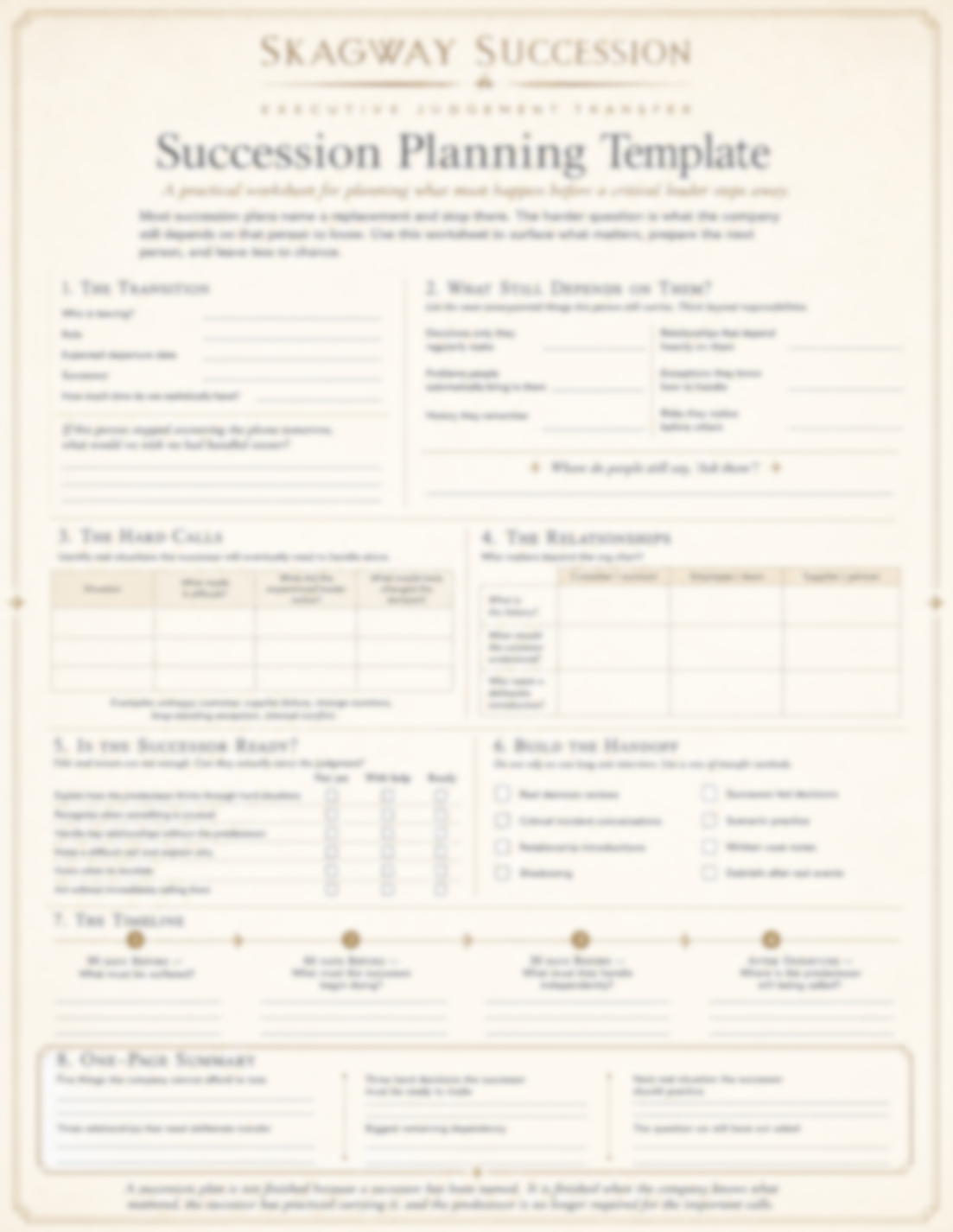
Inside the worksheet
What should make the handoff?
Begin with one person. Follow what still returns to them.
- The person
Name the transition
Who may leave, when might it happen, and who is expected to carry the role?
- The traces
Notice what still comes back
Find the places where a meeting pauses, a customer waits, or someone says, “Ask them.”
- The decisions
Return to the difficult moments
Which decisions needed experience, context, or an exception to the ordinary rule?
- The people
Carry the relationship history
Which customers, employees, suppliers, or partners still depend on personal history?
- The crossing
Let the successor carry it
What should they understand, practice, and eventually decide without calling the predecessor?
The worksheet closes with a timeline: what should surface now, what needs practice, and where the old route is still being called.
A word for the person leaving
The person leaving should want this too.
They spent years learning what works, what fails, who needs to hear the news, and when the usual answer is wrong.
A thoughtful handoff gives those years somewhere to go. The experienced leader can name what deserves to continue, what needs its history attached, and what the next person should be free to change.
A fair handoff
Both people should recognize themselves in the plan.
The company needs
- A successor who understands the history
- Important relationships with another home
- Fewer difficult decisions waiting on one person
The experienced leader deserves
- A say in what should be carried forward
- Context kept beside the decisions they made
- Confidence that the next person will not relearn every lesson alone
The work begins more honestly when preparation feels like stewardship on both sides.
The unanswered part
What if the most important part was never written down?
Procedures describe what usually happens. Experience becomes most visible when the usual answer no longer fits.
What does this person know that nobody knows to ask?
Start with the questions most plans miss.
One page. One person in mind. Enough to see where the handoff may still be thin.
The worksheet shows where to begin.
What actually leaves with the person?
Follow the decisions, relationships, exceptions, and old lessons that rarely appear in the job description.
The next page follows the traces a long tenure leaves behind.